





World news • 13 November 2026
A warning after six months
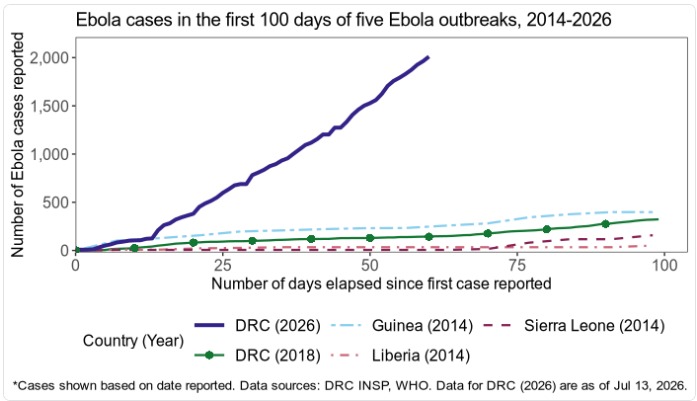
Médecins Sans Frontières said the Ebola outbreak in the Democratic Republic of the Congo was still spreading and that many infections might be going undetected. The charity raised the alarm roughly six months after the outbreak was declared in May 2026. Reuters reported more than 11,000 confirmed cases at the time of the warning, making this a severe public-health emergency.
Challenges for health services
MSF described weaknesses in surveillance, safe patient transport, staff training and essential supplies. In some locations, hospital transmission remained a particular concern. The organisation warned that under-resourced services and delays in identifying patients can hamper efforts to interrupt transmission. Its assessment reflects observations from affected operations and should not be confused with an independently verified count of every infection.
Why this outbreak is especially difficult
Reporting identified the Bundibugyo species of the Ebola virus. The response differs from outbreaks caused by other species because approved medical tools may not be available for the specific strain. Containment therefore places great emphasis on surveillance, infection prevention, community communication, appropriate protective equipment and timely clinical care.
International attention needed
Aid organisations are urging stronger support for frontline teams and affected communities. Officials will need to expand testing, tracking and healthcare capacity while communicating clearly about changing case counts. Readers should rely on health authorities and recognised humanitarian organisations for current advice rather than unverified social media claims.
Sources and editorial note
This independent report is based on the source linked below. Details reflect information available on 13 November 2026. The featured image is illustrative or archival and does not necessarily show the reported event.