


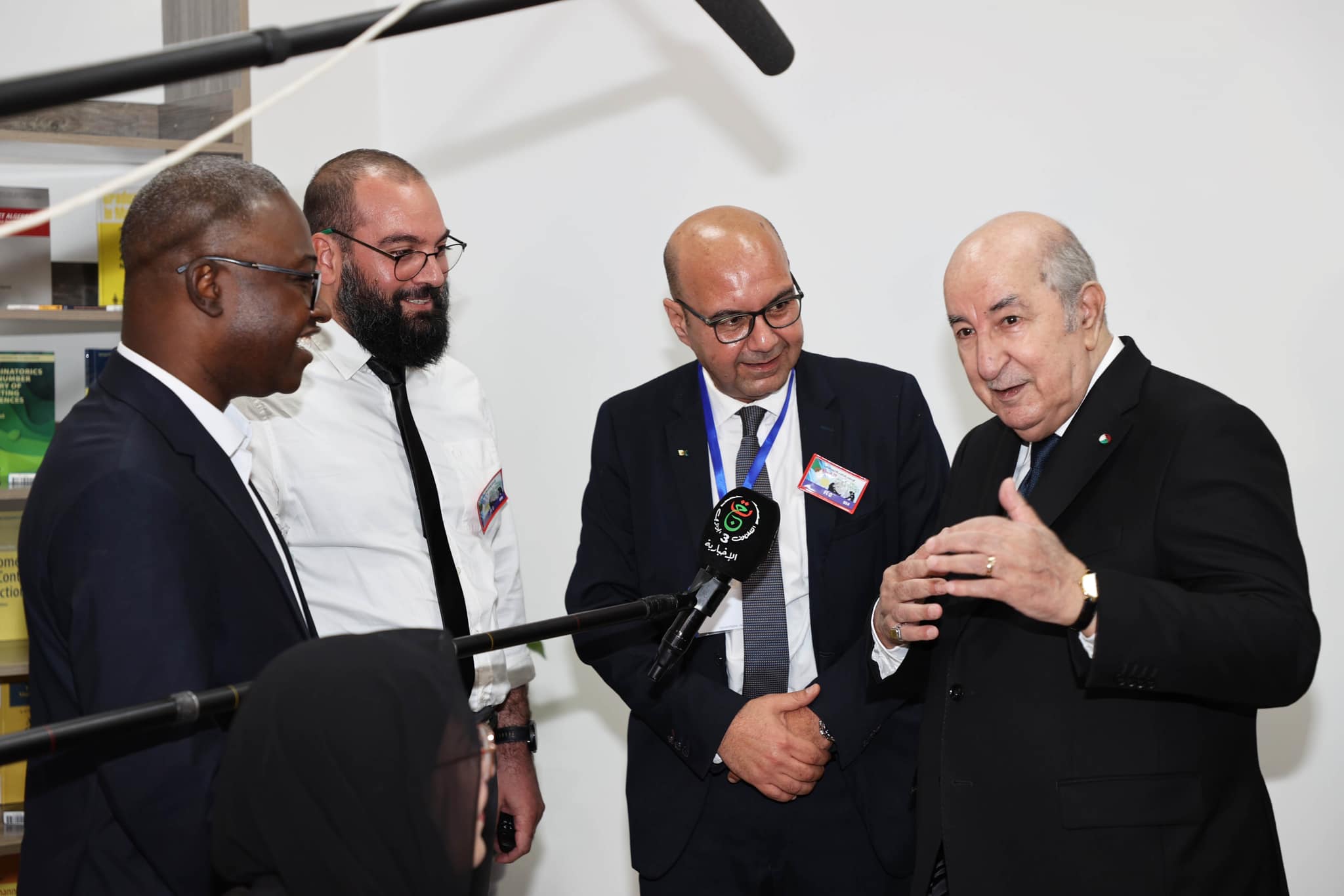
Main image: Abdelmadjid Tebboune (archive photograph, December 2025) — NHSM, Wikimedia Commons, CC BY-SA 4.0.
Algerian President Abdelmadjid Tebboune said on Sunday, 15 November 2026, that Algeria would introduce stricter legislation to address practices he says are undermining citizens’ purchasing power. Speaking at the Supreme Court in Algiers as he opened the 2026–2027 judicial year, he also discussed drug trafficking, national security, corruption and the role of the justice system in the economy. His comments outlined political intentions rather than presenting the full text of new legislation.
A speech to open the judicial year in Algiers
Tebboune delivered his remarks in his capacity as president of Algeria and head of its High Council of the Judiciary. Senior state officials and members of the government attended the ceremony, according to reporting by Anadolu Agency and Algeria Press Service. The event provided a platform for a wide-ranging address about the responsibilities of courts, economic activity and threats the authorities say they face. The speech combined proposals for the future with assessments of the country’s existing institutions.
That distinction is important for readers following the announcements. The president’s intention to introduce a new law is not the same as the law having been passed, published and implemented. The sources consulted do not provide a complete bill, a detailed schedule for parliamentary debate or a list of precise new offences and penalties. His statements should therefore be understood as an announcement of planned measures.
Stricter legislation and the cost of living
Tebboune said the government would adopt tougher legal measures to stop conduct he considers harmful to Algerians and their purchasing power. He referred particularly to the artificial creation of shortages, which can make essential goods harder to obtain. The president accused unspecified actors of exploiting economic conditions and putting pressure on households. The reporting does not establish the identity of those responsible for each alleged practice or provide an independent calculation of its economic effects.
He also spoke about Algeria’s direction towards greater economic openness, while maintaining the social character of the state. In his account, protection of vulnerable and middle-income groups must remain a public priority. His argument was that freer economic activity should operate alongside stronger oversight. These are broad policy positions: the practical balance between competition, regulation and household protection will depend on the legal provisions that are eventually proposed.
Warning about drug trafficking and security
Another important part of the speech concerned the illicit drug trade. Tebboune described the flow of drugs into Algeria as a serious threat to the population and particularly to young people. He said Algeria might, in what he called self-defence, consider action against the sources of production. According to Anadolu Agency, he did not identify any particular country, location or organisation as the intended target and did not specify what form such action might take.
This is a warning made by the president, not evidence that an operation has been ordered or carried out. The remarks should not be interpreted as the announcement of a confirmed cross-border intervention. Tebboune also spoke of terrorism and said Algeria would protect its territory and neighbouring countries. Those statements are part of the country’s security discourse, but the sources do not document a new military operation arising directly from this address.
Justice, corruption and commercial courts
Tebboune praised the judicial system’s work against corruption and illicit enrichment, as well as its role in protecting the national economy. He called for stronger authority for specialised commercial courts, pointing to the importance of resolving business disputes. This subject formed a separate strand of the address: the functioning of courts can affect how contracts are enforced, disagreements are settled and companies operate.
The president also welcomed the digital transformation of the justice sector and referred to institutional reforms undertaken in recent years, according to Algeria Press Service. Praising an institutional reform is different from producing independent evidence that it has achieved every stated objective. The sources available for this article describe the president’s assessment; they do not contain a comprehensive evaluation of court performance, processing times or the results of anti-corruption investigations.
What the address does and does not establish
The clearest announced development is the intention to introduce legislation and pursue stricter enforcement against practices affecting households. Other comments express concerns about security and provide a description of the government’s preferred economic approach. The speech can be summarised through several distinct themes rather than treated as one single policy decision:
- Purchasing power: a promise of tougher laws addressing harmful practices and artificial shortages.
- Economic policy: an emphasis on openness combined with regulation and protection of lower- and middle-income households.
- Public security: a warning about the drug trade, without an identified foreign target or announced operation.
- Judicial policy: support for anti-corruption work, commercial courts and modernisation of the justice system.
None of those points alone establishes that the proposed rules have already taken legal effect. Details of the measures, legal safeguards, judicial oversight and implementation would need to be examined when official texts become available. Attributing the president’s accusations and warnings accurately also matters: statements about suspected harmful practices are political claims, not independent proof against particular people or groups.
What remains to be confirmed
- The text, scope, penalties and timetable of the proposed stricter legislation have not been provided in the consulted reports.
- The president did not identify the alleged sources of drug production or announce a specific security operation in the cited account.
- The practical effects of the proposed economic and judicial measures cannot yet be assessed from this speech alone.
Sources: Anadolu Agency ; Algeria Press Service