

A federal judge has temporarily blocked the Trump administration’s plan to close East Potomac Park in Washington, DC, for a golf-course redevelopment. The decision, reported on Sunday, 15 November 2026, keeps the historic public park accessible while a legal challenge continues. The dispute concerns the government’s authority to close public land, the proposed redesign of its golf facilities and the protection of a site used by residents.
What the federal judge ordered
US district judge Ana Reyes issued a temporary order preventing the federal government from moving ahead with the planned closure and redevelopment work. The park had been scheduled to close on Sunday. The judge concluded that the administration’s stated reasons for closing the site were not persuasive and found that at least two federal laws had been violated in pursuit of an arbitrary timetable, according to reporting published by The Guardian.
The order does not decide every question in the underlying lawsuit. It is a temporary intervention designed to preserve access while the court considers the dispute. The judge’s reasoning nevertheless represents a significant obstacle to beginning the proposed work on the schedule announced by the administration. It also sets limits on how the authorities may manage access to the park during the litigation.
A public park beside national landmarks
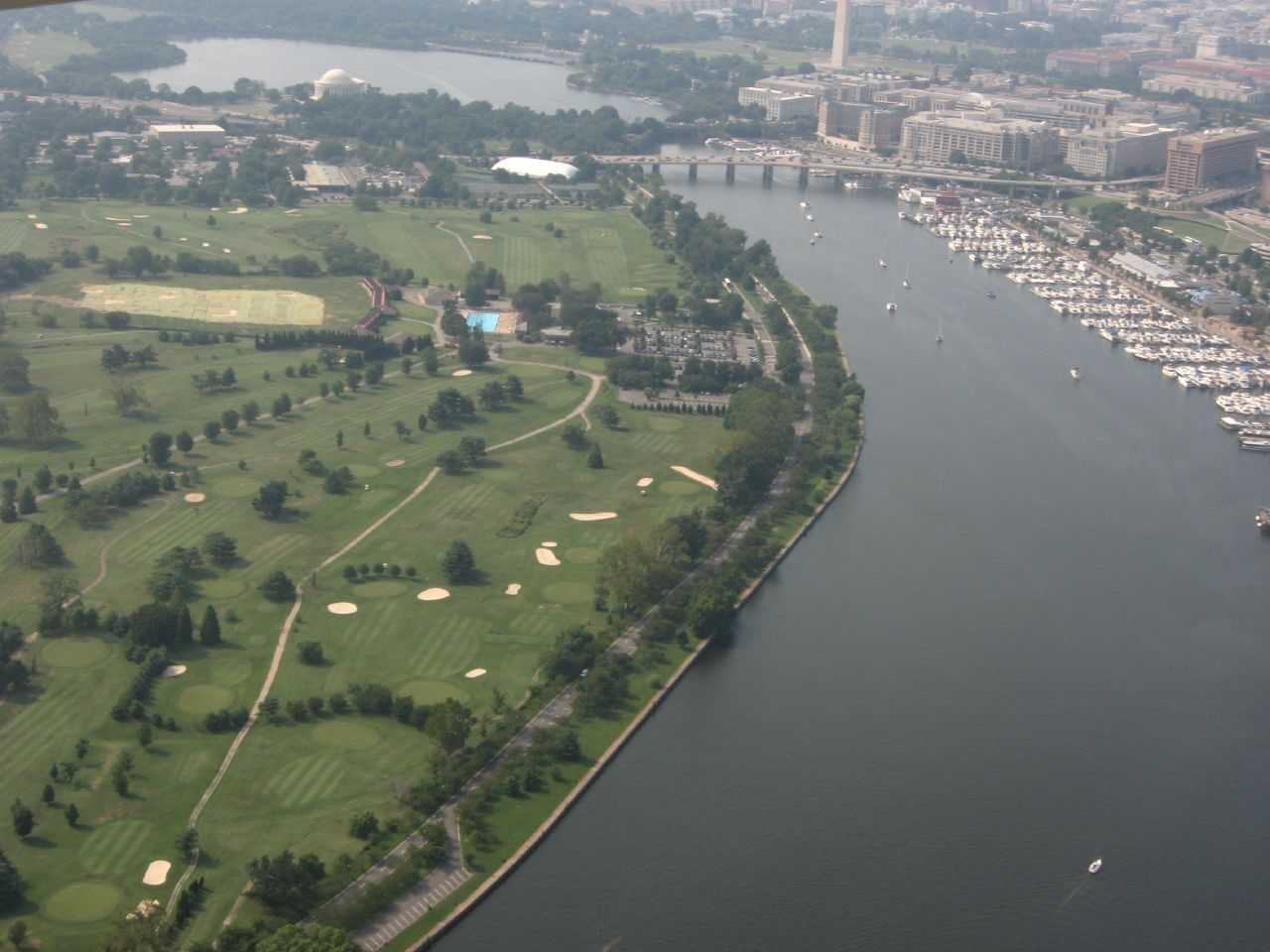
East Potomac Park lies close to the Jefferson Memorial, about three kilometres south of the White House. It contains several golf facilities, but its public role extends beyond the sport. The park includes paths and a paved loop used by cyclists and runners, and the area attracts people who want to spend time outdoors near the Potomac River.
The current site has three golf courses with a combined 36 holes and a miniature golf course. The administration’s proposal would replace those facilities with a single championship-level course of 18 holes. Supporters of the redevelopment argue that the new course could host prominent tournaments and remain open to the public. Critics question whether the change would preserve the park’s accessibility and historic character.
Why the redevelopment is disputed
The lawsuit was brought by the DC Preservation League, a historic preservation organisation, together with two local residents. They argue that the proposed changes would fundamentally alter a longstanding public space and that the government’s plans conflict with federal rules. The plaintiffs have also expressed concern that the redevelopment could make the golf facilities less affordable for ordinary visitors.
President Donald Trump has rejected the suggestion that the project would make the site inaccessible to the public. He has presented the planned course as a prestigious sporting venue capable of attracting major events. The disagreement therefore involves more than a choice of golf-course design: it raises questions about public access, historic preservation and the limits of federal redevelopment powers.
- The administration’s proposal: replace the existing 36-hole configuration with one championship-level 18-hole course.
- The plaintiffs’ position: preserve the character and affordability of a public recreational area.
- The court’s immediate decision: prevent the planned park closure and certain redevelopment steps while the case proceeds.
- The unresolved issue: whether and under what conditions a revised project could lawfully go ahead.
What the ruling means for visitors
The court ordered that the park remain open. However, it did not require the government to continue operating the golf facilities themselves. This distinction is important for people planning to visit: the right to enter the park does not necessarily guarantee that every golf course will be operating normally. The judge also made clear that a suspension of golf operations cannot be used as a justification for excluding the public from the park.
Visitors should therefore distinguish between access to the grounds and the availability of specific sporting services. The ruling protects public access while the legal dispute continues, but operational decisions and future court orders may affect individual facilities. No final timetable for the redevelopment can be inferred from the temporary decision alone.
Earlier tree removal and the continuing lawsuit
The legal conflict predates this latest ruling. The plaintiffs had previously obtained an order restricting tree cutting and other irreversible changes without advance notice. The court later criticised the government’s handling of tree removal at the site. Reyes has also directed an ethics inquiry into whether government lawyers misled the court about the timetable for the park’s closure.
The Justice Department has disputed the judge’s conduct and sought her recusal, which she declined. These disagreements are part of the ongoing legal proceedings, not final findings on every allegation made by the parties. The court’s latest order preserves the park while those issues and the legality of the redevelopment remain contested.
What remains to be confirmed
- Whether a later court decision will permit any part of the proposed redevelopment, and on what conditions, is not yet established.
- The future operating arrangements for the golf courses, as distinct from access to the park itself, remain uncertain.
- The final design, cost, affordability and timetable of any project that proceeds have not been determined by this temporary ruling.