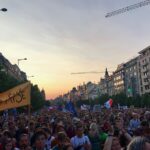
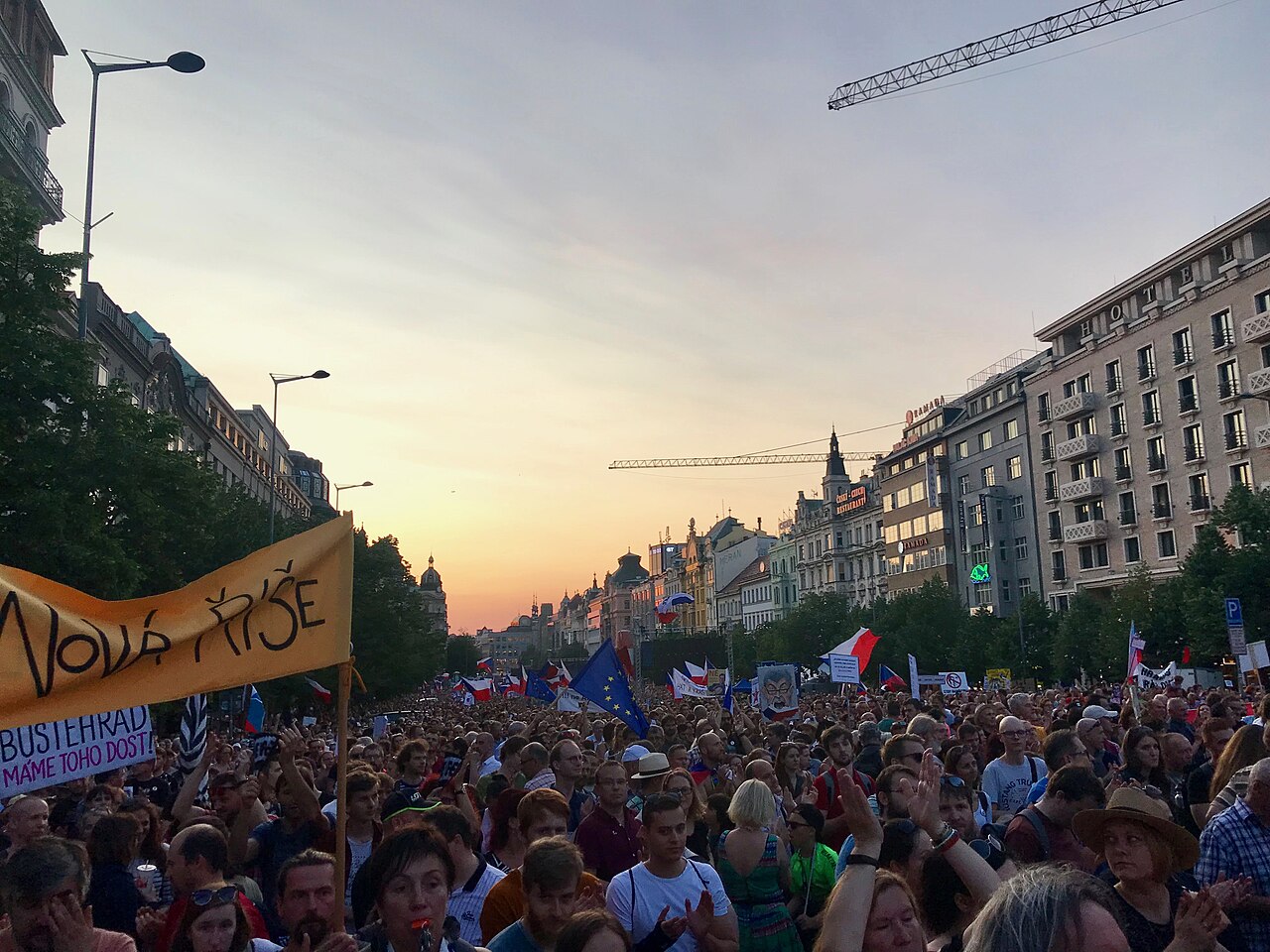
Hundreds of thousands of demonstrators gathered at Letná Park in Prague on Sunday, 15 November 2026, to oppose a Czech government proposal to change how public television and radio are financed. The civic group Million Moments for Democracy estimated the crowd at 350,000 people. Prime Minister Andrej Babiš rejects accusations that his plan would compromise editorial independence, but critics fear it would make broadcasters more vulnerable to political pressure.
Why protesters assembled in Prague
The demonstration focused on the future of Czech Television and Czech Radio, two public-service broadcasters that currently rely on licence fees. Participants objected to a government proposal to abolish those fees and instead pay for the broadcasters from the national budget. Organisers framed the gathering as a defence of independent journalism and democratic oversight. The scale of Sunday’s crowd was an estimate supplied by organisers, rather than an independently verified final attendance count. The rally was held at Letná Park, a site associated with the country’s democratic transition in 1989.
The date was significant because the rally took place two days before the anniversary of the Velvet Revolution protests that helped end communist rule. That historical connection was invoked by participants who regard independent media as a safeguard against the concentration of political power. However, comparisons with earlier political events express the protesters’ concerns; they do not establish that the present government’s proposals will necessarily have the same consequences.
What would change for television and radio funding
Under the proposed legislation, the existing household and business fee system would be replaced with payments allocated through the state budget. Czech households currently pay a combined monthly broadcasting fee of 205 crowns, according to Reuters. Supporters of the reform argue that ending this charge would reduce household costs. The government also maintains that the change would not allow political intervention in editorial decisions.
Public broadcasters and their supporters see the financial arrangement differently. Reporting by the Associated Press and Reuters indicates that the new model would provide approximately 15 percent less funding than the present system. They warn that a smaller budget could affect staffing, programme production and the range of services offered. The exact practical consequences depend on the final legislation and decisions by broadcaster management, so forecasts of cuts should not be mistaken for confirmed layoffs.
How the dispute reached parliament
The government’s coalition advanced the bill through its first parliamentary reading in late October. Critics say the procedure was rushed, with opposition debate curtailed and the vote taking place at 4:36 in the morning. That unusual hour became a symbol of the dispute for demonstrators. The first reading did not enact the bill: further parliamentary stages remain before the proposal could become law.
The conflict has also reached broadcaster employees. Earlier in November, workers at public television and radio staged a one-day strike. Unions, university representatives, students, artists and other civic groups supported the campaign. The Sunday demonstration was therefore not an isolated response to a single vote, but the latest development in a wider debate about financing, parliamentary procedure and the institutional position of public-service media.
Arguments from the government and its critics
Babiš and his allies say they are fulfilling a pledge to relieve households of a regular payment and make broadcasters operate more efficiently. They deny that the intention is to control journalism. The prime minister has continued to defend the proposal despite public opposition. It is important to distinguish this stated government position from critics’ warnings about what might happen after a change in financing.
Opposition parties, campaigners and international media organisations argue that annual budget decisions could create leverage over newsrooms. They point to concerns about media independence in other central European countries, while the Czech government disputes the comparison. The central disagreement is not whether broadcasters need money, but how funding can remain adequate and predictable without allowing elected officials to influence editorial decisions.
- Government: replace licence fees with state-budget funding and reduce household payments.
- Broadcasters: warn that a reduction of about 15 percent could affect services and jobs.
- Protest organisers: demand withdrawal of the bill and protection of independent public media.
- Parliament: must still consider the proposal after its initial reading.
European scrutiny and the next steps
The dispute has attracted attention beyond the Czech Republic. According to the Associated Press, European Union Justice Commissioner Michael McGrath stressed that public-service media funding should be transparent, objective, adequate and predictable. Those principles reflect the concern that public broadcasters need financial stability to serve audiences regardless of which political party holds office. The statements do not amount to a final legal finding against the Czech proposal.
Further debate in parliament will determine whether the bill is amended, withdrawn or adopted. Meanwhile, the protesters’ demands and the government’s insistence on proceeding leave the political outcome uncertain. Sunday’s rally demonstrates the strength of public opposition, but attendance alone cannot determine the parliamentary result or the future financing arrangement.
What remains to be confirmed
- The final independently verified crowd size; 350,000 is the organisers’ estimate reported by the Associated Press.
- Whether lawmakers will revise, withdraw or pass the bill after the remaining parliamentary stages.
- Any eventual staffing or programming changes at Czech Television and Czech Radio if the proposed funding model becomes law.
Sources: Associated Press ; Reuters