




A Spanish judge has named a first suspect in the inquiry into the mass arrival of migrants in Ceuta on 30 and 31 July 2026. María Tardón, of Spain's National Court (Audiencia Nacional), has summoned Miguel Ángel Pérez Triano, the former government delegate in the Spanish-administered city, to appear on 18 November to be heard as a suspect, according to Yabiladi.
What the court wants to establish
The judge's order states that investigators are trying to determine whether the authorities were warned in advance of the influx, and what decisions they took, or failed to take, to prevent or reduce the humanitarian crisis that followed. Being summoned as a suspect (investigado in Spanish procedure) is not an accusation of guilt: it gives the person the right to be assisted by a lawyer and to be heard on the facts, and the case has not reached any trial stage.
Pérez Triano resigned in September, after eight months in the post. Before that, he had said he had warned the central government several weeks ahead of preparations under way in Morocco to cross the border.
The dispute over intelligence warnings
At the centre of the case is a disagreement about who knew what, and when.
- Gonzalo Sanz, Pérez Triano's former chief of staff, told the judge that he passed on to him alerts from Spain's National Intelligence Centre (CNI) about the expected mass arrival.
- Sanz handed over 19 messages exchanged with a contact inside the centre, as well as details of a telephone call on 29 July, the day before the crisis began.
- Pérez Triano disputes this account.
The Spanish government has agreed that the head of the intelligence office in Ceuta will testify in the confidential part of the proceedings, and that reports on the events be declassified. According to the same source, those reports have not yet been declassified.
A claim about a special border crossing
Separately, Hespress, relaying a report by the Spanish daily El Independiente, says a police officer told Judge Tardón on Thursday that authorities had opened a special crossing at the Ceuta border on 28 July, two days before the mass entry, so that Spain's newly appointed consul in Tangier could enter the city.
According to the officer:
- opening a dedicated lane for the consul was not the usual practice;
- he had been instructed to arrange the passage and had informed the head of the Foreigners Brigade beforehand;
- the diplomat arrived in the afternoon and went back to Morocco by the same route.
The officer added that police had heard rumours that the visit was meant to warn of a planned mass entry from Morocco, but said he could not independently confirm them. That point therefore remains an unverified rumour reported in testimony, not an established fact, and none of the sources consulted contains a statement from the consul or from the Spanish foreign ministry on it.
Background
Ceuta, a Spanish-administered city on the Moroccan coast also claimed by Morocco, has already experienced a large-scale entry of migrants across its border in May 2021. The July 2026 events have raised the same questions about border control, intelligence-sharing and political responsibility on the Spanish side. The sources consulted here do not give figures for the number of people involved, and this article does not estimate them.
What to retain
- A judge has designated a first suspect: the former government delegate, who must appear on 18 November.
- The dispute centres on whether CNI warnings were passed on; Pérez Triano denies receiving them in the way described.
- The intelligence reports have been agreed for declassification but are not yet declassified.
- The claim of a warning linked to the consul's crossing is unconfirmed.
- The proceedings are at the investigation stage; no one has been charged or convicted.
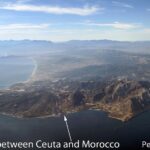
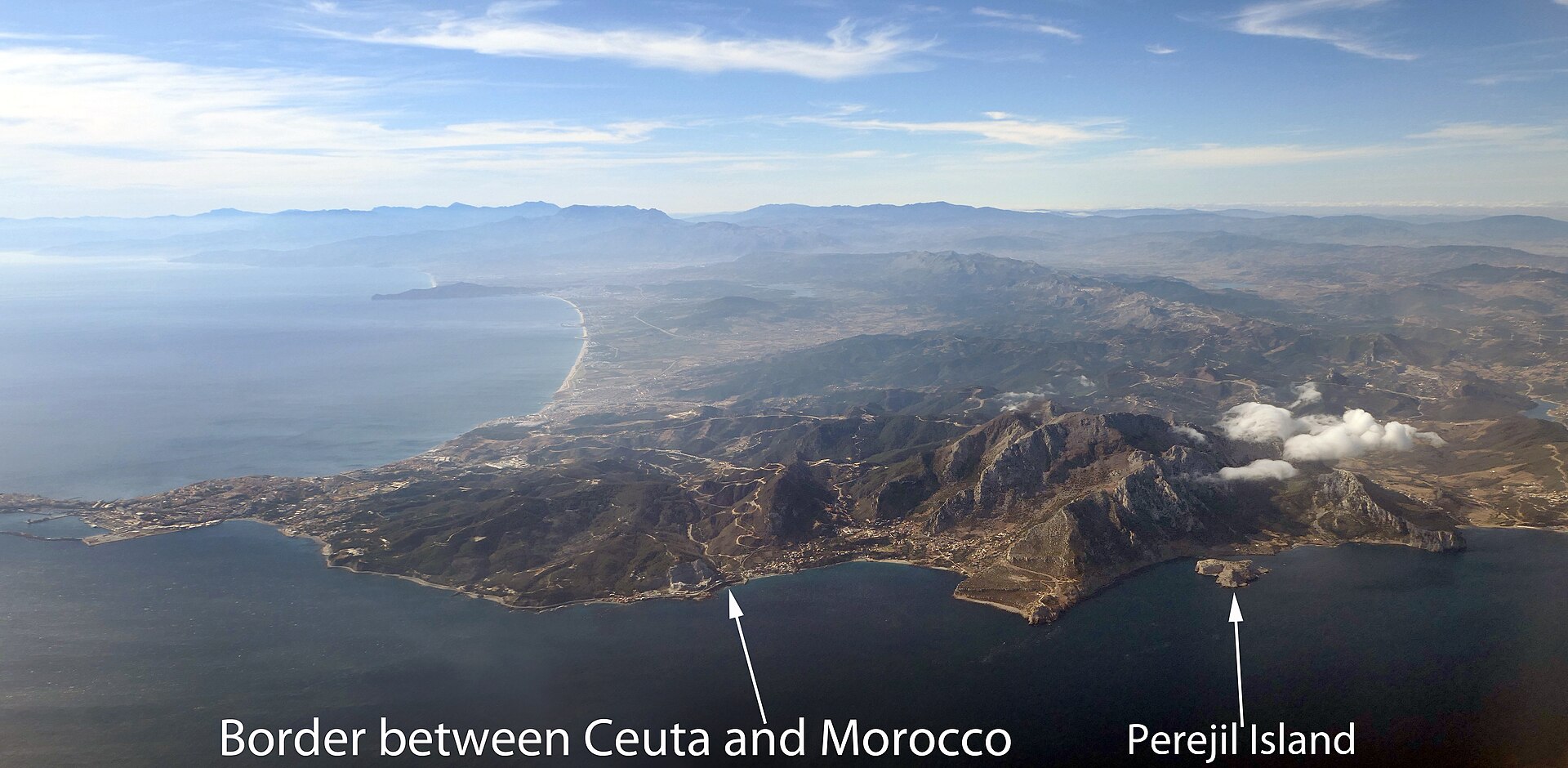
Main image: aerial view of the Ceuta-Morocco border area — Adam Cli, Wikimedia Commons, CC BY-SA 4.0.
Sources
- Yabiladi — Spanish court summons former government delegate in Ceuta over mass migrant crossing
- Yabiladi FR — Ceuta : l'ancien délégué du gouvernement espagnol convoqué comme suspect après la crise migratoire
- Hespress EN — Spanish police opened special Ceuta border crossing for Spain's consul two days before mass entry