



The debate over Iran's place in the Nuclear Non-Proliferation Treaty (NPT) has gained new momentum in Tehran. On Thursday 12 November, the Assembly of Experts, the clerical body that appoints and oversees the Supreme Leader, called for an examination of withdrawal from the NPT and a review of the country's defence doctrine. It described this as an "unavoidable necessity" and a national demand.
No formal decision has been taken. The Foreign Ministry says Iran remains committed to the treaty, and several officials stress that the final say lies with the country's top security body.
What the Assembly of Experts said
According to Iranian state broadcaster Press TV, the assembly, which has 88 members, also warned that any new attack on Iran would meet a response "without geographical limitations". Press TV presented the statement in an opinion article defending the idea of leaving the treaty; it is Iranian state media and does not offer an independent view.
The statement puts the debate at a senior level of the Islamic Republic. It does not, however, have the force of a law or of a government decision.
A divided parliament
In parliament, opinions differ. MP Kamran Ghazanfari told Euronews on 13 November that the doctrine should be reviewed to strengthen deterrence. He said Iran's missiles can carry warheads and that MPs are trying to formalise a withdrawal. He accused members of parliament's presiding board of having blocked a plan last year and of keeping the issue off the floor.
According to Press TV, MP Hossein Ali Hajideligani announced on 20 September 2026 that a "triple-urgency" motion on leaving the NPT had been submitted. That procedure allows a text to be fast-tracked.
Former MP Heshmatollah Falahatpisheh sees things differently. Speaking to Euronews, he warned that withdrawal would "lay the groundwork for future wars". He said the Supreme National Security Council (SNSC) has not approved the urgent bill, and he expressed doubt that Iran has a nuclear weapon.
The security council's ambiguous position
The SNSC secretary, Mohsen Rezaei, has kept up the ambiguity. Euronews reports that he said Iran "has certain things", without saying more. On 1 November, according to Press TV, he stated that no official decision had been taken to change the doctrine.
What leaving the NPT would involve
Article X of the treaty allows a state to withdraw if "extraordinary events" related to its subject matter have "jeopardised the supreme interests" of the country. The state must give three months' notice to the other parties and to the UN Security Council, with an explanation.
Iran has been a party to the NPT since it entered into force in 1970. A withdrawal would end its obligation to place its nuclear facilities under the inspections of the International Atomic Energy Agency (IAEA).
The context: strikes and suspended inspections
The debate follows a series of military attacks on Iran by the United States and Israel. In June 2025, strikes hit the sites of Fordow, Natanz and Isfahan. Press TV mentions a further attack on 28 February 2026. Since then, IAEA verification in Iran has been suspended.
Euronews notes that the results of the US midterm elections have reduced the prospect of a new American attack in the short term. Diplomatic contacts remain stalled: US Secretary of State Marco Rubio reported no progress in early November, and Tehran demands an end to sanctions before any talks.
What remains to be confirmed
- Whether the triple-urgency bill will reach the floor of parliament and when.
- The position of the Supreme National Security Council, whose approval is decisive.
- Whether the Assembly of Experts' statement reflects a change in the Supreme Leader's line.
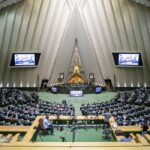
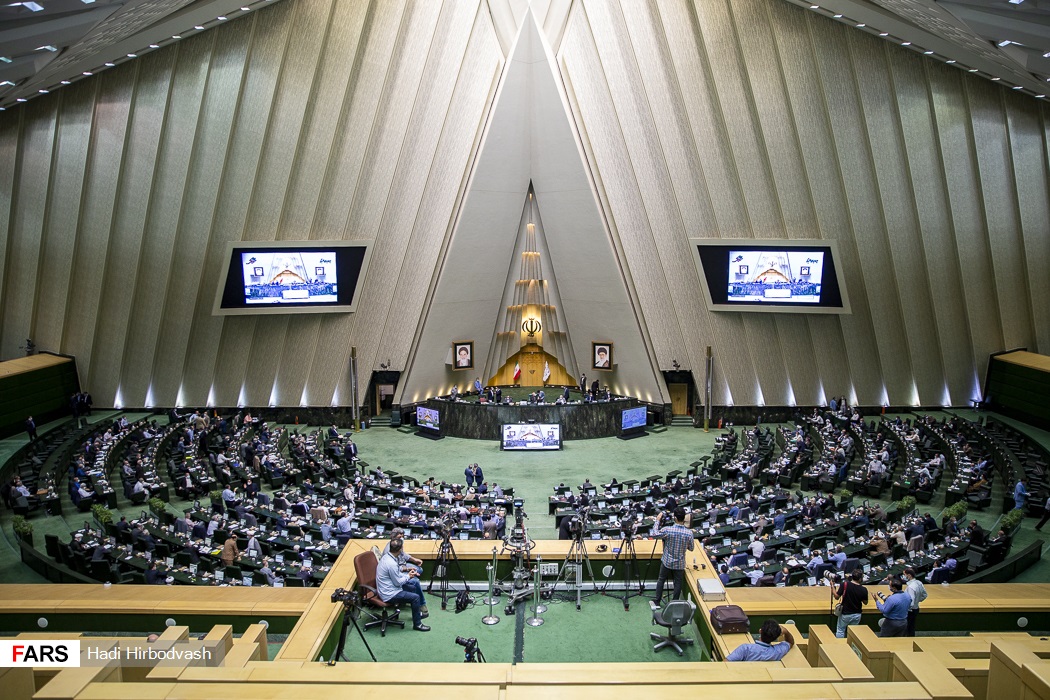
Main image: the Iranian parliament building in Baharestan, Tehran (file photo) — Fars News Agency, Wikimedia Commons, CC BY 4.0.