





On Friday 13 November 2026, a threatening phone call sent several campuses of the Al Jabr school group in Casablanca into lockdown for about two hours. The alert, which targeted the school with a car-ramming or car-bomb attack, turned out to be a hoax. A security source later told the press that a 15-year-old student had been arrested in connection with the case.
What happened
According to the letter sent by the head of the school group, Cyrille Loffroy, to parents and the wider school community, the group received around midday a telephone call threatening an attack with a ramming vehicle against its Oasis and Bouskoura secondary campuses. Yabiladi, citing initial findings, reports that the school received two calls from an unknown number that morning, the caller threatening to detonate a car bomb outside the main entrance.
The school immediately activated its PPMS (Plan Particulier de Mise en Sécurité, the French-model safety plan for schools), a protocol that pupils and staff regularly rehearse. Under the plan:
- everyone present stays inside the buildings, protected from any outside danger;
- parents may not enter and pupils may not leave while the alert lasts, so that young people are not exposed on the public road.
Although the threat named the Oasis and Bouskoura secondary sites, the head chose, as a precaution, to extend the lockdown to the group's primary schools and to the Dar Bouazza campus.
The response of the authorities
As soon as the call was received, the school informed both Moroccan and French authorities, as the procedure requires. The head praised the "prompt reaction" of the national police (DGSN) and the Royal Gendarmerie, who secured the surroundings of the various campuses, and noted the constant follow-up provided by French authorities during the incident. Hespress's English edition adds that police and local authorities searched the area around the school for possible explosives.
The school explained that, once the local authorities were involved, the management of the lockdown fell under their sole responsibility, and lifting it required their formal authorisation. After checks confirming it was a false alarm, the lockdown was lifted at around 2 p.m. and classes resumed. Families could then either collect their children or let them stay for the rest of the school day, and some did collect them.
The arrest
According to Yabiladi, which cites a security source, a 15-year-old student was arrested in Casablanca around midday on Friday on suspicion of involvement in the bomb hoax. The arrest was made by Casablanca's judicial police in coordination with the General Directorate for Territorial Surveillance (DGST). The source adds that investigators identified the arrested student and that police were still looking for a second student, also a minor, suspected of involvement in incidents targeting several schools in the city.
These are the elements reported by a single outlet citing an unnamed source, and no official statement had confirmed them at the time of writing. The persons concerned are minors and, like any suspect, are presumed innocent until proven otherwise; for that reason no identifying detail is given here.
A wave of similar threats elsewhere
Hespress notes that the incident follows a wave of similar threats against schools in several European countries earlier this week. On Wednesday, Italian media reported that 312 schools had received bomb threats, leading to evacuations and checks before the warnings were declared false. In Britain and Ireland, police opened investigations into threatening emails sent to hundreds of educational institutions, including schools in Scotland, Northern Ireland and the Republic of Ireland. Authorities have not established any connection between the Casablanca incident and those reported in Europe.
Why the protocol matters
The episode shows how the PPMS works in practice: confinement rather than evacuation, since an evacuation could push children towards the very street that is threatened. It also shows its cost: for two hours, parents who were worried and unable to enter received information mostly through the school's communication. The school itself recognised the legitimacy of that concern, while calling on everyone not to give in to panic and thanking staff and pupils for their calm.
What to retain
- The threat was a hoax; no explosive device was found and no injury was reported in the sources consulted.
- The lockdown lasted roughly two hours, from about noon to 2 p.m.
- A minor is reportedly under arrest and a second is being sought; the investigation is ongoing.
- No link with the threats against European schools has been established.
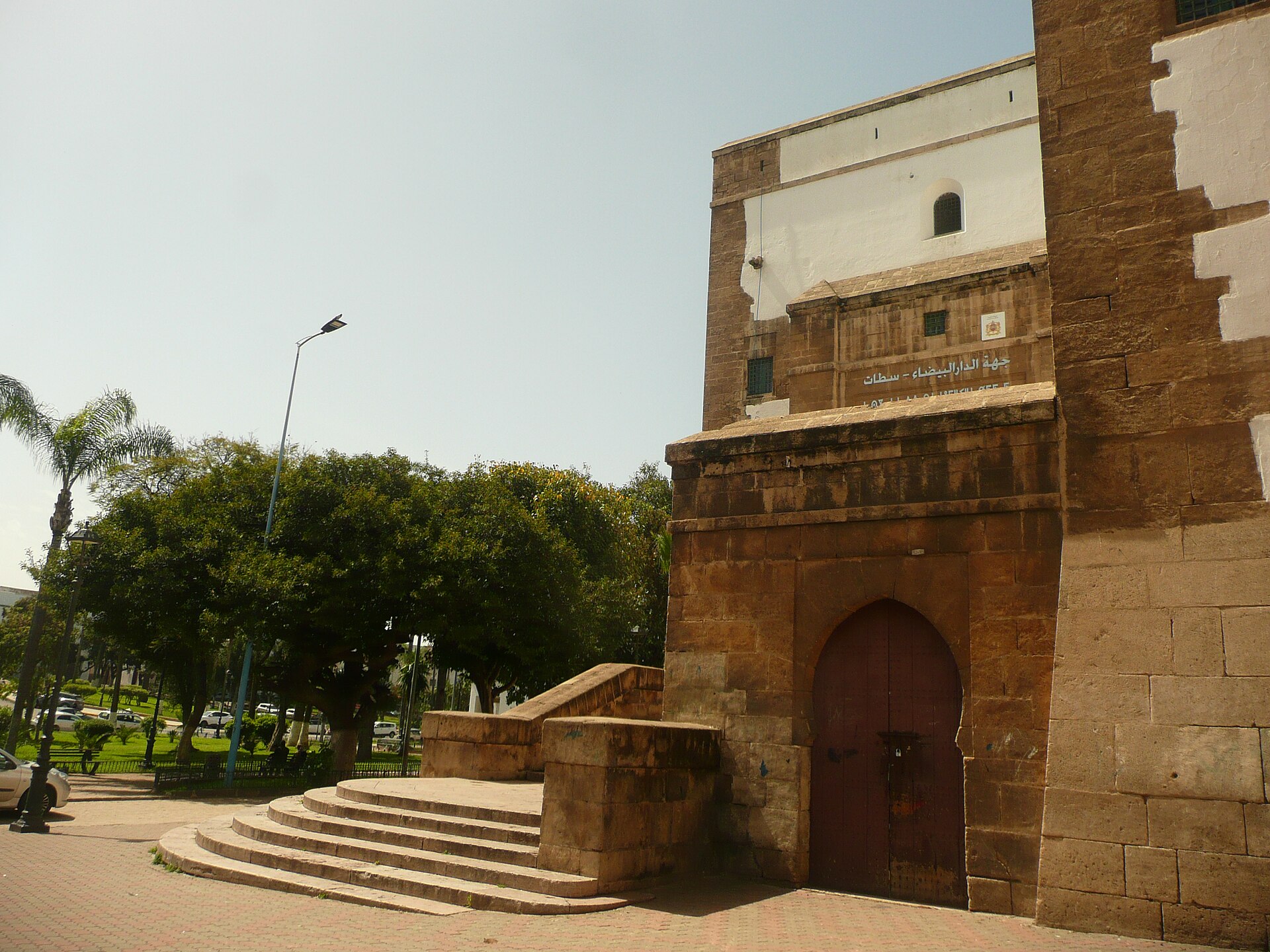
Main image: a street corner in Casablanca (illustrative photo, not taken at the school) — Palesaint744, Wikimedia Commons, CC BY 4.0.
Sources
- Hespress FR — Casablanca : le groupe scolaire Al Jabr donne les détails de la fausse alerte à la voiture-bélier
- Le360 — Fausse alerte à l'École Al Jabr : les explications du chef d'établissement
- Hespress EN — False bomb threat prompts security operation at Casablanca private school
- Yabiladi — Casablanca: Minor detained after false bomb threat at Al Jabr School