








On World Diabetes Day, observed every year on 14 November, Morocco's Ministry of Health and Social Protection released its latest figures and a message of prevention: around 2.7 million adults live with diabetes in the country, and nearly half of them do not know it. The ministry has chosen as this year's theme "Act early against diabetes to protect your health", with a clear focus on early diagnosis and prompt treatment.
The figures released by the ministry
The data come from the 2017-2018 National Survey on Common Risk Factors for Noncommunicable Diseases, the most recent national reference cited by the ministry:
- 10.6% of people aged 18 and over have diabetes, which corresponds to about 2.7 million adults;
- a further 10.4% of adults are at the prediabetes stage, a condition that raises the risk of developing type 2 diabetes;
- nearly half of those who have diabetes are not aware of their condition;
- more than 43,000 children are affected, according to the ministry.
Internationally, the latest estimates mentioned by the ministry put the number of adults living with diabetes at more than 589 million, a figure that could reach 853 million by 2050. About 43% of people with the disease would not know they have it. Diabetes remains among the ten leading causes of death in the world.
Why late diagnosis is dangerous
Diabetes is often called a "silent" chronic disease: it can develop for years without obvious symptoms. The ministry warns that delayed diagnosis increases the risk of serious complications affecting the heart and blood vessels, the kidneys, the eyes and the nervous system. In practical terms, this means a higher risk of blindness, kidney failure, amputations, strokes and heart attacks.
Among children and adolescents, the ministry says it wants above all to prevent medical emergencies, in particular diabetic ketoacidosis, a serious complication that sometimes reveals the disease for the first time.
A growing bill for the health system
The disease also weighs on public finances. According to data from the National Health Insurance Agency (ANAM) for 2021, annual spending related to diabetes exceeded 1.5 billion dirhams, with an average annual growth of more than 10%. Those figures predate the generalisation of compulsory health insurance, so the current bill is likely to be higher, although no more recent official total was released with this announcement.
What the national programme provides
The ministry says it places the fight against diabetes among the priorities of its sectoral health plans. The national diabetes programme is delivered through primary healthcare centres and regional health structures, and is built around four axes:
- awareness and prevention;
- early screening;
- therapeutic education and support for patients;
- training and skills development for health professionals.
The ministry also insists on the role of lifestyle, with the support of the media to inform the public. It says it will continue to work with health professionals, civil society and other partners to improve prevention, guarantee affordable care and strengthen the management of the disease nationwide.
Warning signs to watch for
The ministry asks citizens to pay attention to the main signs that can reveal diabetes:
- intense and persistent thirst;
- frequent urination;
- unexplained weight loss;
- significant fatigue or physical weakness;
- blurred vision.
Anyone who notices these symptoms should see a doctor quickly or go to the nearest health facility. Only a blood test can confirm the diagnosis.
The budget backdrop
The announcement comes as Parliament examines the 2027 Finance Bill. On 5 November, Health Minister Youns Bjijou presented a proposed 2027 health budget of 45.4 billion dirhams, compared with 42.4 billion in 2026. The proposal includes 8,000 positions, of which 2,600 are for the territorial health groups, the upgrading of 1,600 primary healthcare centres and the renovation of 90 hospitals. Primary care is precisely where the diabetes programme operates, so the proposed upgrade of these centres is directly relevant to screening capacity.
What to retain
The message of the day is simple: the earlier diabetes is detected, the better the chances of avoiding its complications. With nearly half of affected adults undiagnosed, screening is the main lever the authorities are counting on.
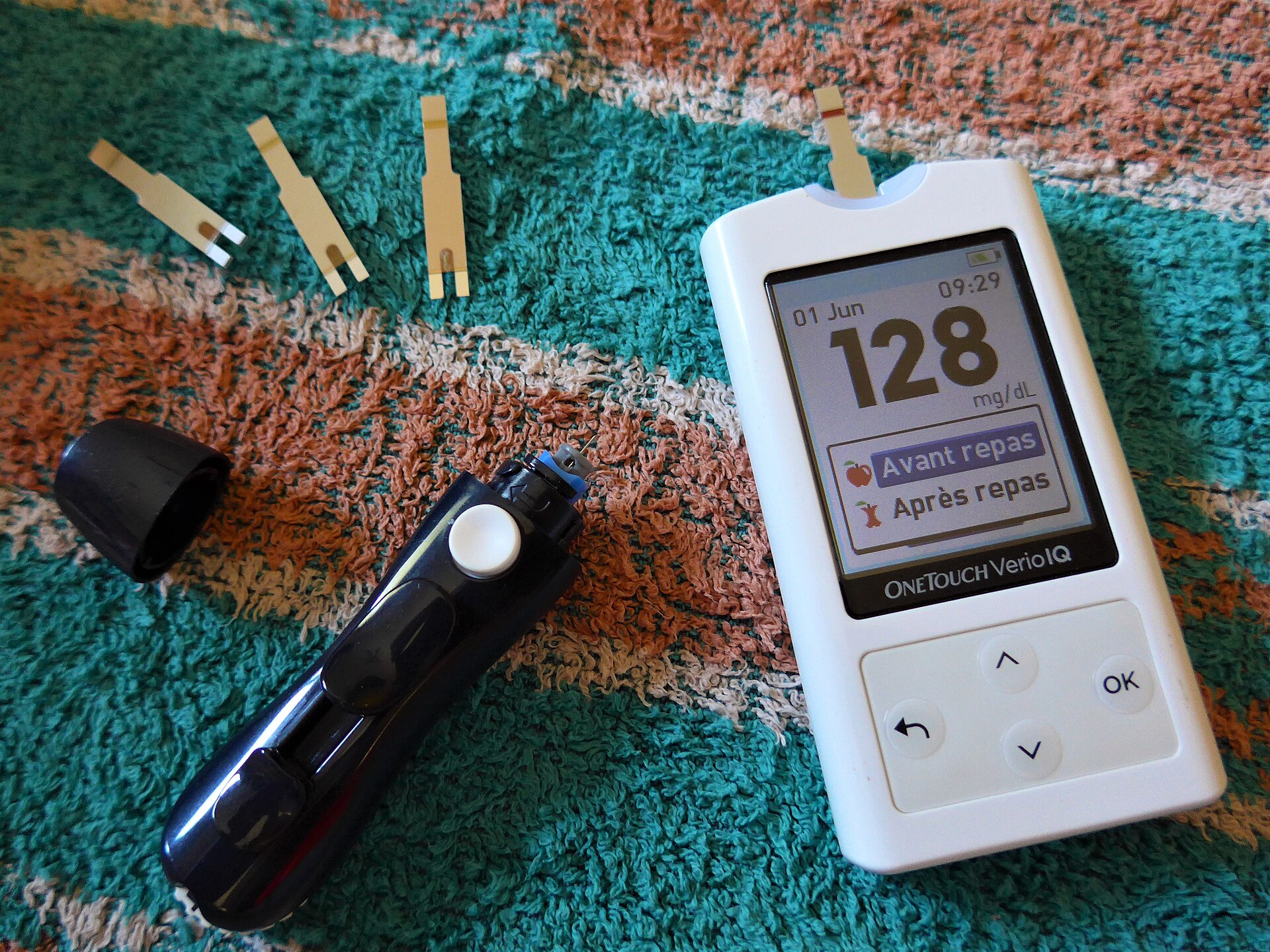
Main image: blood glucose meter (illustrative photo) — Celeda, Wikimedia Commons, CC BY-SA 4.0.