



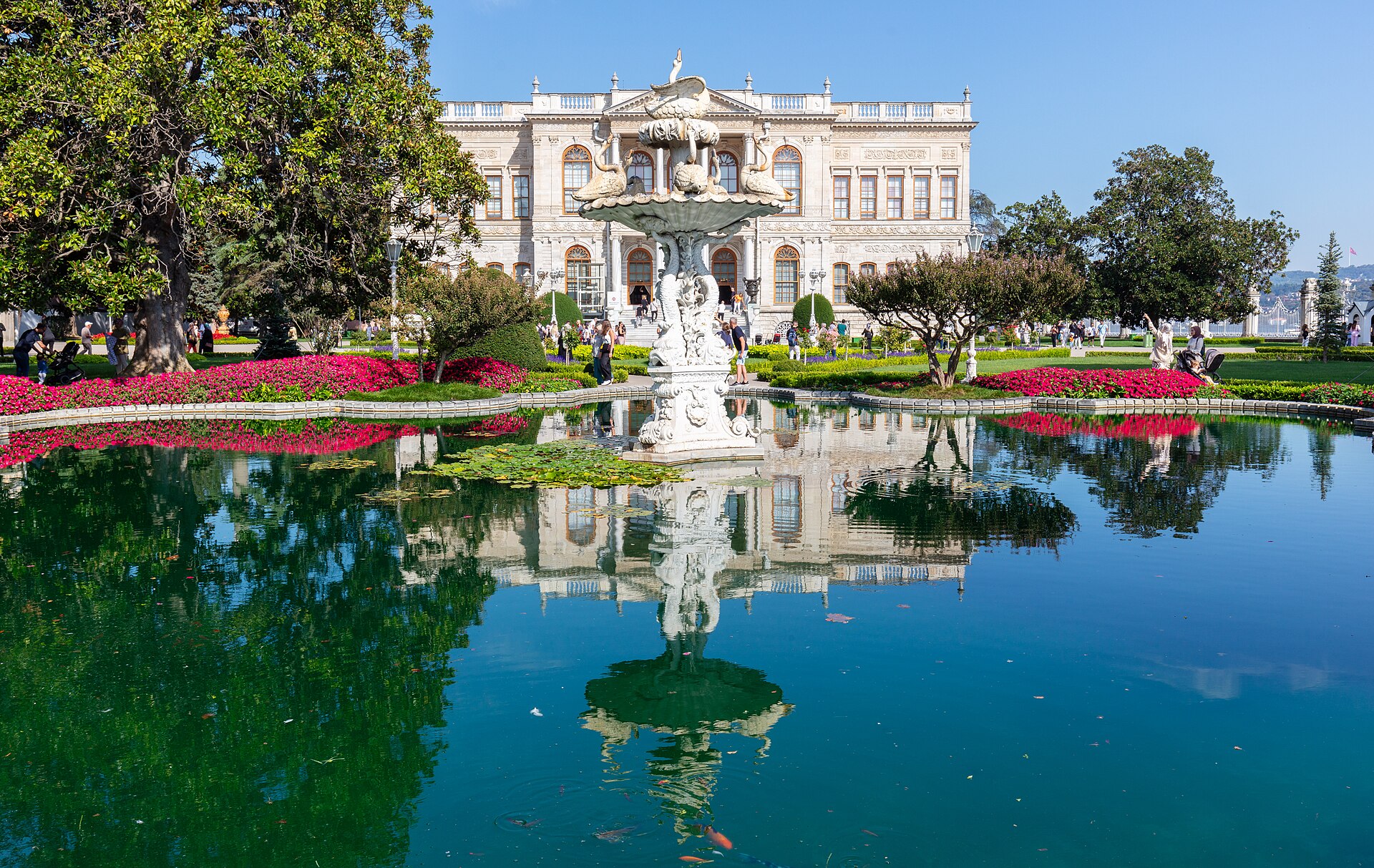
Türkiye and Qatar have formalised their military partnership. On Friday 13 November, President Recep Tayyip Erdoğan and the Emir of Qatar, Sheikh Tamim bin Hamad Al Thani, signed a mutual defence agreement at the Dolmabahçe Presidential Office in Istanbul, during the 12th meeting of the strategic committee that has guided relations between the two countries since 2014.
What was signed
The defence pact was one of five documents adopted during the meeting, and the only one signed personally by the two heads of state:
- a mutual defence agreement;
- an agreement on education;
- a memorandum on consumer protection and market oversight;
- a memorandum on peace, reconciliation and conflict resolution, signed by Turkish Foreign Minister Hakan Fidan and Qatar's Prime Minister and Foreign Minister Sheikh Mohammed bin Abdulrahman Al Thani;
- a joint statement closing the committee meeting.
The strategic committee itself was created by an agreement signed on 19 December 2014. It meets regularly at leader level and has become the main channel for coordinating defence, trade and diplomatic files between Ankara and Doha.
What the defence pact says
According to the official communiqué, the two countries commit to a common position against any external armed attack targeting one or both of them. They also agree to consult each other on threats, to expand joint military exercises, and to deepen cooperation in the defence industry and in training.
Several essential points remain unclear. The communiqué does not say what would trigger the commitment, nor what form a joint response would take. The full text of the agreement has not been published, and it is not known whether it must be ratified by the Turkish parliament before entering into force.
Erdoğan said the pact added "a new dimension" to the relationship and that cooperation in the defence industry would grow. He also said the two countries wanted to prevent war from flaring again in the Gulf.
A Gulf still under pressure
The signing comes against the backdrop of the US-Israeli war on Iran and continuing disruption to shipping in the region. In their joint statement, the two leaders called for the swift and full resumption of safe passage through the Strait of Hormuz, through which a large share of the world's oil and liquefied natural gas transits.
The leaders also discussed Gaza, Syria and Libya, and welcomed what the communiqué called the "Badr memorandum", a framework bringing together Türkiye, Qatar, Pakistan and Indonesia.
What analysts say
Abdulla Banndar Al-Etaibi, a researcher at Qatar University, told Al Jazeera that the agreement is meant as a deterrent rather than an offensive tool, and that it builds on a Turkish military presence already established in Qatar. Analyst Mahjoob Zweiri sees it as a sign that Gulf states are diversifying their security partnerships.
Writing for Anadolu, Ozcan Tikit suggested that future cooperation could cover missile defence, drones and armoured vehicles. These are hypotheses: no specific programme was announced on Friday.
Economic ties behind the alliance
The security partnership rests on substantial economic links:
- Turkish contractors have carried out 206 projects in Qatar worth about $20.8 billion;
- the two countries have set a bilateral trade target of $5 billion;
- a trade and economic partnership agreement has been in force since 2025.
A broader regional pattern
The Istanbul pact is not Ankara's only new defence commitment. Earlier this month, the Turkish parliament ratified the "Mecca Agreement for Joint Defense" with Pakistan and Saudi Arabia, by 279 votes to 119 on 5 November. Taken together, these agreements show Türkiye positioning itself as a central security partner for several Muslim-majority states.
What remains to be confirmed
- The full text of the defence agreement and the conditions that would trigger it.
- Whether the Turkish and Qatari parliaments must ratify it, and on what timetable.
- Any concrete joint programmes in air defence, drones or armoured vehicles.
- Reactions from Iran, Gulf neighbours and NATO partners.
Main image: Dolmabahçe Palace, Istanbul, 28 September 2024 (illustrative photo) — Diego Delso, Wikimedia Commons, CC BY-SA 4.0.