


What happened
Two studies published on 10 November in The Astrophysical Journal explain how a future space observatory, LISA, could discover planets in a completely new way: by listening to gravitational waves instead of looking at light. The work was led by Casey McGrath, a researcher at the University of Maryland, Baltimore County and NASA's Goddard Space Flight Center.
Nothing has been detected yet. LISA is still being built and is slated for launch in the mid-2030s. The mission is led by the European Space Agency (ESA), with NASA as a partner.
How it would work
Gravitational waves are tiny ripples in space-time, first detected in 2015. LISA's most common sources are expected to be double white dwarfs: two small, dense remnants of Sun-like stars orbiting each other very closely.
On their own, such pairs emit gravitational waves at an almost constant frequency. If a massive enough planet orbits the pair, it makes the two stars wobble slightly, and this leaves a mark on the signal. “Its presence becomes imprinted on the gravitational wave signal in a way we'll be able to uncover,” McGrath said in NASA's announcement.
The idea is not new: Japanese astronomer Naoki Seto proposed it in 2008. The new studies work out in detail which planet masses and orbits the method suits best.
Why it matters
No planet has ever been found around a double white dwarf. Any detection would therefore reveal a new population of worlds.
Astronomers estimate that the Milky Way contains about 10 million double white dwarfs with orbits shorter than an hour. LISA is expected to pick out about 10 000 of them individually, plus around 100 pairs of other kinds.
How a discovery would be checked
The second study proposes using the James Webb Space Telescope to confirm candidates. A planet in such a system gives off more infrared light than the stars alone would, and Webb could detect this excess out to at least 500 light-years.
What LISA will look like
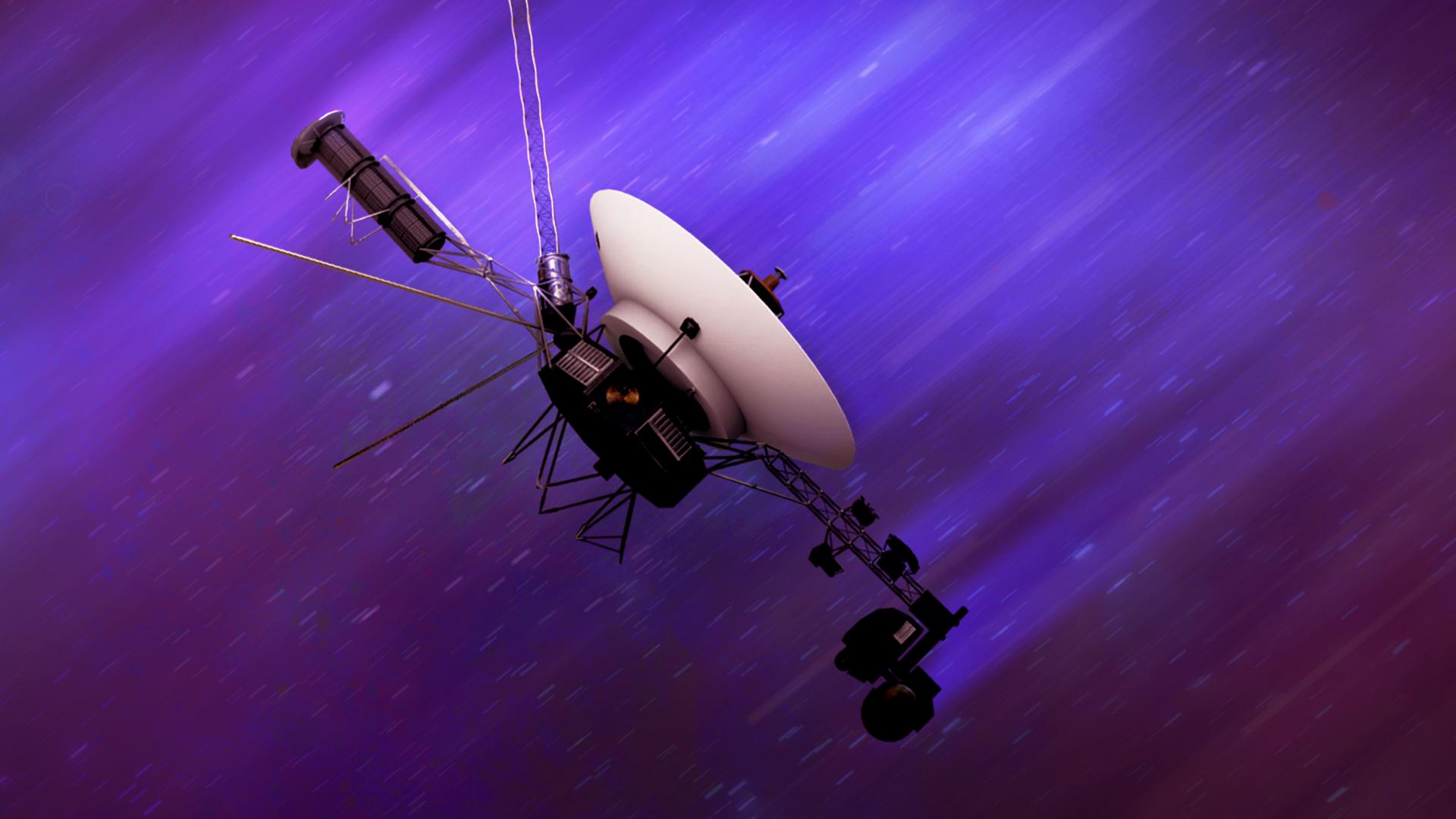
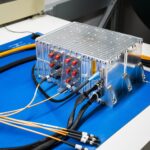
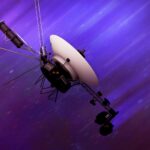
LISA will consist of three spacecraft following Earth around the Sun, forming a triangle 2.5 million kilometres on each side and linked by laser beams.
What remains uncertain
These are theoretical studies. How many planets LISA will actually find, if any, will only be known after the launch. This article relies on a single source, NASA.